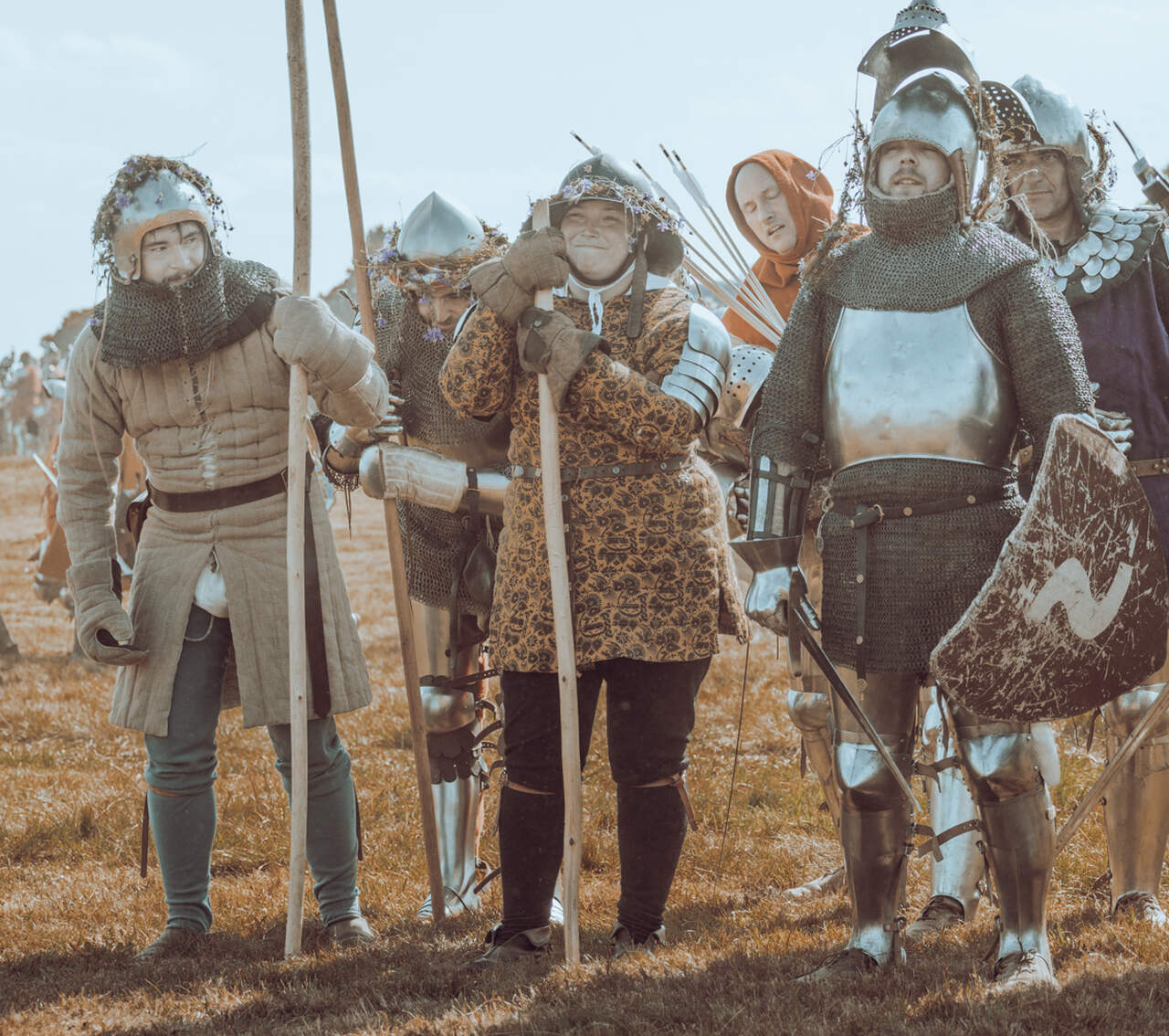
3rd Tournament for the Ring of Duchess Danuta
We will take the inhabitants of the Podlaskie Voivodeship on an extraordinary journey back in time – to the distant 14th century, when the lands of our town were still covered by primeval forest, and today's Suwałki region was part of the Grand Duchy of Lithuania, bordering the State of the Teutonic Order to the west and, to the south-west, Masovia, then a fief dependent on the Kingdom of Poland.
These were times of political intrigue in the shadow of the approaching Great War with the Order, times of brave knights and ambitious ladies, of sword and bow, but also of the flourishing of culture, art and all kinds of crafts in the lands that were just beginning to unite into the mighty Polish-Lithuanian Commonwealth – Terra Jagiellonica.
Suwałki Folk Costumes
Workshops in cutting and sewing traditional folk costumes of the Suwałki region, co-organised with NIKiDW (National Institute of Rural Culture and Heritage).
The first workshops took place on 16 November. We are learning cutting and sewing methods as well as the white embroidery typical of the Suwałki region.
Earlier projects
Historical fencing classes
In 2021, the Hanza Living History Foundation was invited by the Jaćwież Foundation to cooperate on the public task "Development of chess among children, young people and adults". The application of both partners was approved by the National Freedom Institute under the NOWEFIO 2021 programme.
The project involved multidisciplinary activities focused on training and activating volunteers in Suwałki, and as its contribution the Hanza Foundation organised the "Team Knightly Biathlon" tournament and historical fencing training. The project lasted half a year and ended in December, but at the participants' request the Foundation's activities continued until the end of June the following year.
As part of the knightly classes, the Foundation provided training and sports practice aimed at broadening the participants' knowledge and skills in handling medieval edged weapons. Classes were held once a week for each age group, and each group consisted of about 10 people.
During the classes, basic sword fighting techniques were presented, as used on the medieval battlefield and in modern knightly tournaments. Participants learned the basics, such as sword grips, stances, delivering blows, defending with shield and sword, and much more.
The instructor promoted knightly behaviour and fair play, with an emphasis on respect for the opponent. Safe, certified training weapons were used, and the classes were led by an instructor with many years of experience both in fighting in the lists and in training others.
The project aimed at the all-round development of the participants: chess was responsible for mental skills, and fencing for physical ones. The Foundation adopted the motto "Fencing is just fast chess", to prove that when handling a sword, the head is what matters most.
Participants competed in the "Team Knightly Biathlon", in which they had to show both physical fitness and quickness of mind. Teams competed alternately in chess and in sword fighting, and the winner was the team that collectively scored the most points.
Baltic Costumes
In 2023, the Foundation obtained funds from the Podlaskie Marshal's Office and the City of Suwałki for the public task "Reconstruction of Historical Baltic Costumes from the Suwałki Region and the Grand Duchy of Lithuania". The project involved reconstructing sets of medieval costumes from the Suwałki region on the Polish and Lithuanian sides of the border.
The task was not easy due to the scarce historical sources, but we managed to gather enough material to recreate a probable, hypothetical image of the clothing and accessories of the era.
Members of the Foundation prepared 3 sets of costumes, obtaining the materials needed to make them. Most of the wool used for the tunics and the elements of the peplos-type dresses with aprons and a cape had been dyed by Foundation members with plant dyes found in the region. The linen fabrics used in the project (underwear) were hand-woven, as was some of the wool fabric.
Some of the accessories and ornaments were made by specialised craftsmen, and some by Foundation members themselves. The result is interesting and has already been presented many times.
The costumes premiered during the European Heritage Days on 16.09.2023 at Primary School No. 11 in Suwałki, at an event called "Historical Fashion Show". Participants learned interesting facts about the sources concerning the Suwałki region, its material and intangible culture, and how this influenced the clothing of people of the era.
The process of making the costume sets was presented in detail, and at the end the participants could see the results up close. The costumes were also presented at the Suwałki Cultural Centre during the event "Meeting with the History of Fashion" and during the 11 November celebrations, during which Foundation members paid tribute to the fallen wearing these costumes.
We plan to keep presenting the costumes at cultural and educational institutions and to expand the collection with further sets.