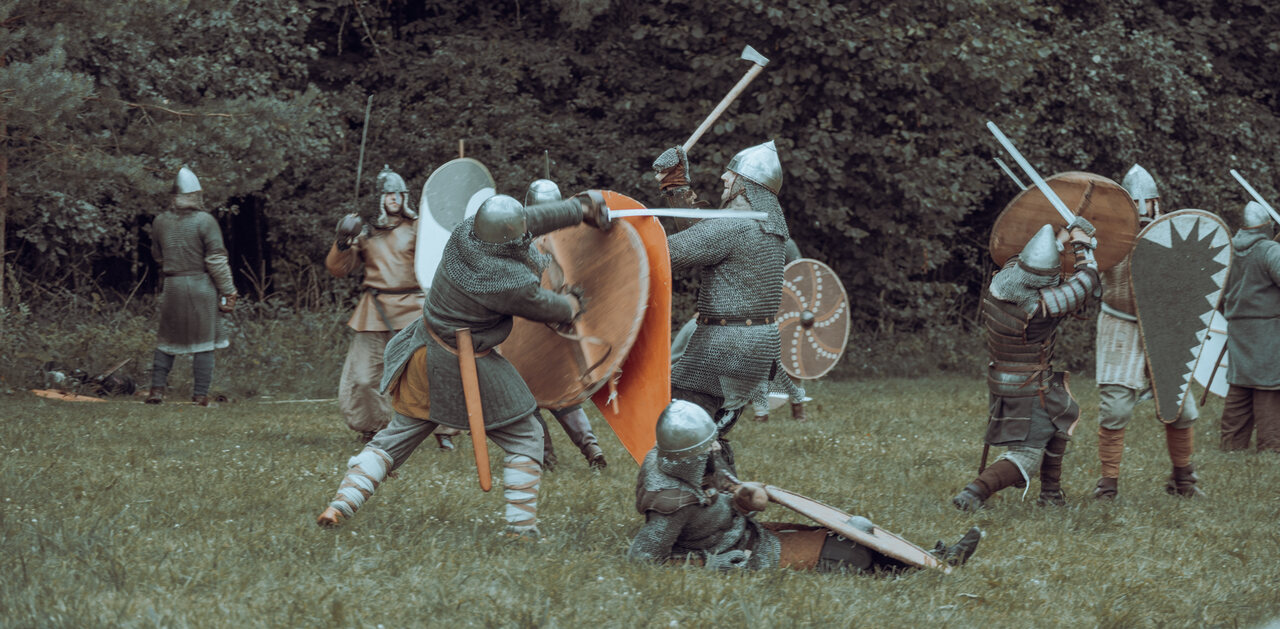
The Early Middle Ages is a moment of great political change in Europe.
Governments rise and fall, unexpected alliances are forged, new institutions form, and Christianity becomes the dominant religious force. Then the beginning of Poland is recognized (966 – baptism), and Masovia, with its capital in Czersk, is threatened by invasions of Baltic tribes from the north and east.
Then, according to one of the theories, Magnus Haroldson, the son of the English king Harold Godwinson who fell at Hastings (related to both the Piasts and the Estrydsens – the dynasty ruling in Denmark), had to flee and took refuge first in Denmark, then in Wrocław, where he took the office of commissioner.
However, it did not take long for him to go to Masovia, where he also took up the office of komes in Czersk, which means he was to watch over the security of the region by commanding military force.
There is little knowledge about him and the times in which he lived, but it allows us to try to reconstruct his costumes, customs and other aspects of spiritual and material culture, which we do with great passion.
Komes Magnus was buried in the courtyard of the Czersk castle, near the altar of the first chapel, which he probably founded. Interestingly, he was buried according to the Danish rite, partly pagan, with rich grave goods. His skeleton is currently the subject of analyses and research at the intersection of archaeology and genetics.
Members of the Foundation have reconstructions of clothing and camp and military equipment from the 10th–11th century from Denmark and the Baltic areas.
Examples of events in which we took part:
- 1000th anniversary of the Battle of the Bug (and subsequent editions)
- Kiedy Bródno Było Grodem w Warszawie
- Yatvingian Picnic in the Suwałki region